For the past decade, the prevailing orthodoxy in enterprise IT was the “borderless cloud.” The strategic imperative was simple: move data to where compute was most abundant, typically massive hyperscale regions in Northern Virginia, Frankfurt, or Dublin. In this worldview, physical location was a trivial engineering detail.
However, in the 2026 fiscal year, this paradigm is colliding with a synchronized wave of regulatory forces. From the Gulf Cooperation Council (GCC) to the European Union, the concept of Data Sovereignty has evolved from a preference into a precise, punitive legal regime.
ILUM
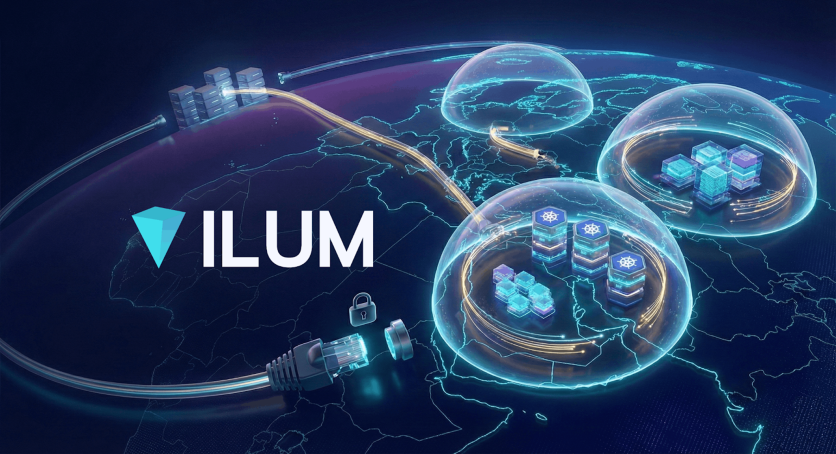
We have entered the era of the Sovereign Data Estate.
Definition: The Sovereign Data Estate is an architectural paradigm that physically locates data processing within national borders while maintaining open-standard interoperability, effectively decoupling compute capabilities from the jurisdiction of foreign cloud providers.
This strategic guide synthesizes the regulatory drivers (Oman PDPL, EU Data Act), economic realities, and the specific architectural roadmap (exemplified by platforms like Ilum) required to navigate this new landscape.
- I. 2026 Regulatory Compliance: Oman PDPL & EU Data Act
- 1. Oman PDPL Compliance Deadline: February 2026
- 2. KSA Data Residency & The “National Interest” Firewall
- 3. EU Data Act: Switching Requirements
- II. The Sovereignty Paradox: Why Legacy Infrastructure Fails
- III. Architecture of the Air-Gapped Data Lakehouse
- 1. Kubernetes as the Universal Substrate
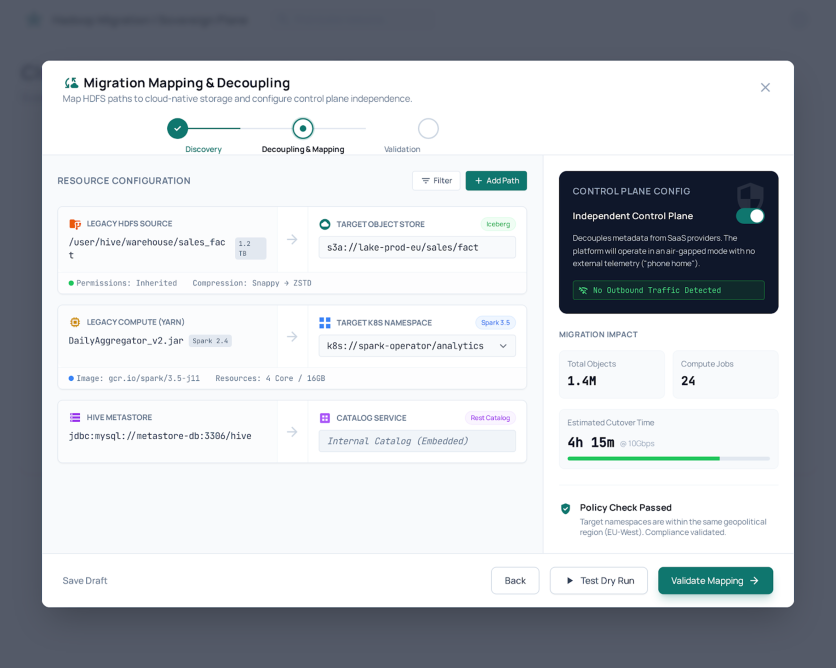
- 2. True Air-Gapped Operations
- 3. Open Standards (Iceberg/Delta) as a Legal Defense
- Table 1: Sovereign Capability Comparison (2026 Standards)
- IV. Migration Engineering & Economics
- Migration Engineering Playbook
- V. The Future: Sovereign AI and On-Premise LLMs
- 1. From RAG to Agentic Workflows
- 2. Air-Gapped Inference
- Conclusion
- Frequently Asked Questions (FAQ)
I. 2026 Regulatory Compliance: Oman PDPL & EU Data Act
The “grace periods” of the early 2020s are expiring. Across the Middle East and Europe, regulations are forcing a fundamental re-architecture of enterprise data systems. The timeline for compliance is no longer abstract; it is fixed.
1. Oman PDPL Compliance Deadline: February 2026
The Sultanate of Oman has set a hard deadline. The Ministry of Transport, Communications, and Information Technology (MTCIT) extended the compliance grace period for the Personal Data Protection Law (PDPL) to February 5, 2026.
- The Warning: This extension signals an expectation of total, audit-ready compliance by the new date.
- The Risk: Penalties for non-compliance reach up to OMR 500,000 (approx. $1.3 million USD).
- The Technical Challenge: Unlike GDPR’s “legitimate interest” clauses, Oman’s framework prioritizes explicit consent and strict localization. Data must be physically processed within the Sultanate. Furthermore, proving consent lineage often requires automated data lineage tracking to verify exactly which datasets contain user information.
2. KSA Data Residency & The “National Interest” Firewall
In Saudi Arabia, the absence of a comprehensive “Adequacy List” of approved foreign jurisdictions means enterprises must operate under a “default sovereignty” posture.
- The CLOUD Act Conflict: Reliance on US-headquartered hyperscalers introduces risk via the US CLOUD Act, which can compel US companies to provide data regardless of server location. For defense and critical infrastructure, the only compliant architecture is often a private cloud that is fully air-gapped from foreign control planes.
3. EU Data Act: Switching Requirements
While the GCC focuses on residency, the EU is attacking commercial lock-in. The EU Data Act mandates the elimination of “switching charges” by January 2027.
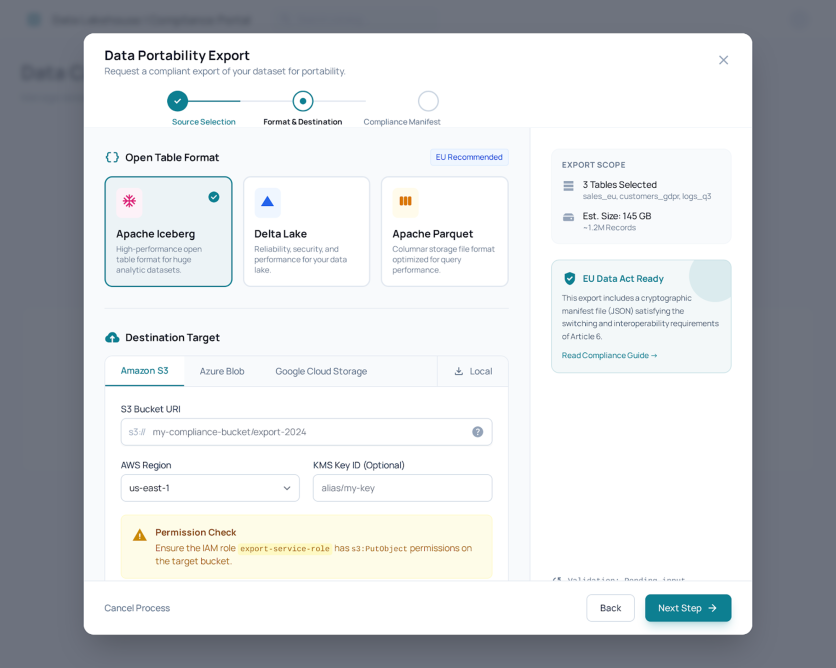
- Functional Equivalence: Cloud providers must ensure customers can switch to a competitor or on-premise infrastructure without functional degradation. This effectively mandates the use of open table formats (like Apache Iceberg or Delta Lake) over proprietary SaaS warehouses.
ILUM
II. The Sovereignty Paradox: Why Legacy Infrastructure Fails
This regulatory tightening creates the “Sovereignty Paradox”: To remain competitive, enterprises need the elasticity and AI capabilities of the modern cloud; to remain compliant, they need the isolation of on-premise infrastructure.
Legacy systems fail to solve this paradox:
- The Cloudera Trap (Legacy Hadoop): Traditional on-premise clusters offer control but are rigid and expensive. Licensing fees often scale per node, stranding capital in idle compute. This has accelerated the urgency for Hadoop migration to more flexible containerized environments.
- The SaaS Dilemma: Platforms like Snowflake and Databricks offer agility but often rely on centralized control planes hosted in the US or EU. For a sovereign entity, a platform that cannot function without “phoning home” creates an unacceptable dependency.
The Strategic Realignment:
The only viable path is to decouple the capabilities of the cloud from the location of the provider. Platforms like Ilum serve as the case study for this approach, focusing on “software over service” to build a compliant Data Lakehouse.
ILUM
III. Architecture of the Air-Gapped Data Lakehouse
The industry is shifting toward Kubernetes Data Platforms that prioritize portability and isolation.
1. Kubernetes as the Universal Substrate
By building on Kubernetes, modern lakehouses can run identically on bare-metal servers in a secure Muscat bunker, a sovereign cloud provider in Riyadh, or a public cloud region in Frankfurt.
- Decoupled Storage: Unlike HDFS, this architecture separates compute (Spark on Kubernetes) from storage (S3/MinIO). This allows data to reside in low-cost, compliant object storage while compute scales dynamically.
- Structured Governance: This architecture natively supports the Medallion Architecture (Bronze/Silver/Gold), ensuring data is systematically refined from raw ingestion to high-quality business aggregates.
2. True Air-Gapped Operations
For defense and critical sectors, “sovereign” means offline. A key differentiator for 2026 readiness is the ability to install and operate without any internet connectivity.
- The Mechanism: The air-gapped installation process involves downloading artifacts (Docker images, Helm charts) to a secure bastion, transferring them via physical media (USB/diode), and hosting them in a local container registry.
- Local Control: The control plane (e.g., ilum-core) must run entirely within the customer’s cluster, ensuring no metadata or usage statistics ever leave the facility.
3. Open Standards (Iceberg/Delta) as a Legal Defense
To satisfy the EU Data Act, data must be stored in open formats like Apache Iceberg. This ensures portability and supports ACID transactions—crucial for complying with the “Right to Erasure” without rewriting terabytes of data.
Table 1: Sovereign Capability Comparison (2026 Standards)
FeatureIlum (Sovereign Estate)Cloudera (Legacy)Databricks / Snowflake (SaaS)Data ResidencyAbsolute. Deploys on any K8s cluster (On-prem, Sovereign Cloud). No “home region” dependency.High. Private Cloud Base runs fully on-premises.Variable. Limited to available public cloud regions. “National Interest” concerns persist regarding control planes.Air-Gapped OpsNative. Full support for offline registries, local Helm charts, and disconnected operation.Supported. Requires complex “parcel” management and local mirroring.Limited/None. Most advanced features (Marketplace, Unity Catalog) require connectivity to the SaaS control plane.Erasure RightsNative. Supports ACID deletes/updates via Iceberg/Delta for PDPL compliance.Complex. Legacy HDFS makes row-level erasure difficult without compaction/rewrites.Native. Fully supports ACID transactions, but data is often in proprietary storage.
IV. Migration Engineering & Economics
Moving to a sovereign estate yields significant economic dividends. Shifting from node-based licensing (legacy) and consumption-based markups (SaaS) to a self-hosted Kubernetes model can reduce Total Cost of Ownership (TCO) by 60–75%.
Migration Engineering Playbook
Implementing this shift requires specific technical steps:
- Storage Modernization (HDFS to S3A): Migrating from HDFS to object storage requires tuning. Engineers must utilize the S3A Magic Committer to write data directly to final destinations, bypassing the slow “rename” operations typical of HDFS file systems.
- Pipeline Modernization: Legacy ETL jobs are often refactored into modern workflows. This increasingly involves running dbt Core on Spark to handle SQL-based transformations within the Kubernetes cluster.
- Remote Connectivity: For teams transitioning from legacy edge nodes, technologies like Spark Connect allow developers to submit jobs remotely from their IDEs without requiring direct SSH access to the cluster.
V. The Future: Sovereign AI and On-Premise LLMs
By 2026, the data estate will be the engine room for Sovereign AI. The goal is “Model Sovereignty”—the ability to run, tune, and govern AI entirely within national borders.
1. From RAG to Agentic Workflows
The industry is moving beyond simple Retrieval Augmented Generation (RAG) to Agentic RAG. Sovereign platforms address the “Table Problem” in AI by giving agents direct access to the lakehouse schema and SQL execution tools. The agent queries the data as a database, preserving relational integrity rather than relying on fuzzy vector matches.
2. Air-Gapped Inference
To mitigate supply chain attacks, model weights (e.g., Llama 3, Mistral) must be stored in local, air-gapped registries. Inference runs on local GPUs within the sovereign perimeter, ensuring that neither the training data nor the user prompts are exposed to external model providers.
Conclusion
The year 2026 represents a definitive turning point. The regulatory forcing functions—Oman’s consent mandates, Saudi Arabia’s national interest firewalls, and Europe’s interoperability laws—create an environment where legacy rigidity and SaaS extraterritoriality are liabilities.
The Sovereign Data Estate is no longer an option; it is the baseline for digital survival. By adopting platforms that are sovereign-by-design, enterprises secure not just compliance, but their strategic independence.
Frequently Asked Questions (FAQ)
Q: What is the deadline for Oman PDPL compliance?
A: The Ministry of Transport, Communications, and Information Technology (MTCIT) has extended the full compliance deadline to February 5, 2026. After this date, non-compliance may incur penalties up to OMR 500,000.
Q: Can I use Snowflake or Databricks for sovereign data in Saudi Arabia?
A: It depends on the classification of the data. While these platforms have local regions, they often rely on external control planes. For “National Interest” or defense data requiring air-gapped isolation, a self-hosted Sovereign Data Estate (like Ilum) is often required to eliminate foreign jurisdictional risk.
Q: How does the EU Data Act affect cloud data warehousing?
A: The EU Data Act mandates “functional equivalence” for switching cloud providers by 2027. This effectively requires enterprises to store data in open table formats (like Apache Iceberg) rather than proprietary locked formats, ensuring data can be moved without degradation.