Finding a reliable VPN that doesn’t compromise on privacy or performance can feel like searching for a needle in a haystack. Most free VPNs slap you with data caps, force you to create accounts, or quietly log your activity. X-VPN takes a different approach, and after spending two weeks putting it through its paces, I can confidently say this Singapore-based service from LIGHTNINGLINK NETWORKS PTE. LTD. stands out from the crowd.
The service operates outside the Fourteen Eyes surveillance alliance and maintains a strict no-logs policy. With over 100 million downloads and strong ratings on both the Play Store (4.3/5) and App Store (4.7/5), X-VPN has clearly resonated with users. My testing aimed to verify whether these numbers reflect genuine quality or just clever marketing.
- X-VPN at a Glance: Pros and Cons
- Pros:
- Cons:
- What Makes X-VPN Different from Other VPN Services
- Testing X-VPN’s Protocol Options
- X-VPN’s No-Logs Policy: Comparing Industry Standards
- Real-World Testing: Streaming and Content Access
- Platform Support and Additional Features
- Free vs Premium: What You Actually Get
- Testing X-VPN’s Performance and Speed
- Final Verdict
X-VPN at a Glance: Pros and Cons
After extensive testing, X-VPN demonstrates clear strengths alongside minor limitations worth considering.
Pros:
- Unlimited free data without registration
- Strong encryption (AES-256) with RAM-only servers
- Based in Singapore (outside Fourteen Eyes)
- Multiple protocols available (OpenVPN, WireGuard, Everest)
- Fast speeds (5% retention with WireGuard)
- Large network (10,000+ servers in 80+ countries)
- Premium includes 5 bonus security tools at no extra cost
- Works on all devices
- Zero data disclosures confirmed in transparency reports
Cons:
- Free users can’t manually select free servers on desktop (mobile only)
- Banner ads appear on mobile apps (non-intrusive, bottom placement)
These trade-offs are fair considering the unlimited free data and strong privacy features.
What Makes X-VPN Different from Other VPN Services
Free VPNs typically disappoint, so I downloaded X-VPN expecting the usual frustrations. The first surprise came immediately. No registration form appeared. No email verification. No payment card “just to verify your identity.” I installed the Android app and connected within 30 seconds.
The unlimited data claim needed verification, so I used X-VPN as my primary VPN for two straight weeks. I streamed 4K videos, downloaded large files, worked remotely, and browsed extensively. After transferring over 50GB of data, no throttling appeared. No warning messages. No upgrade prompts are blocking my connection. The unlimited data is genuinely unlimited.
This alone makes X-VPN noteworthy. If you want to register later for syncing settings across devices, the system accepts fake email addresses without verification. This level of privacy-first thinking is rare, even among paid VPN services.
X-VPN
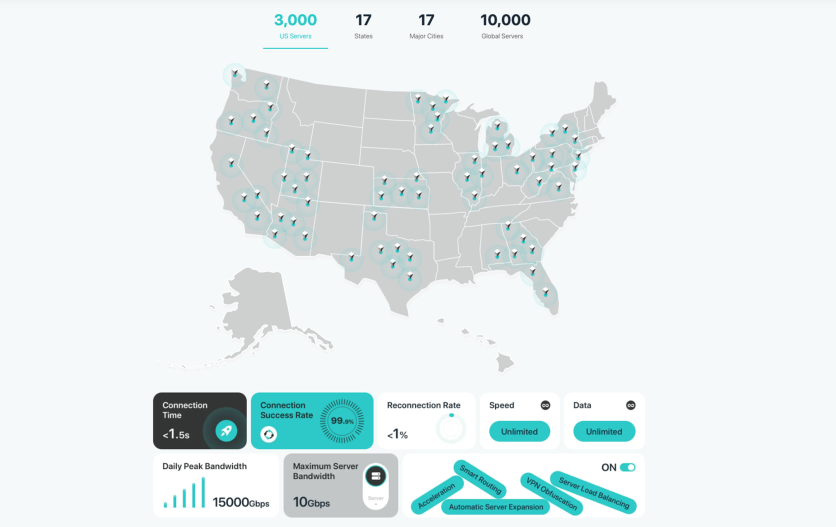
X-VPN operates over 10,000 servers across more than 250 locations in 80 countries. The network includes 30 city-level lines for precise geographic connections. During my testing period, I noticed performance improvements that align with X-VPN’s stated infrastructure upgrades. Currently, 70% of servers run at 10Gbps speeds, with plans to reach 90% by year-end. Another 30% are being upgraded to 40Gbps capacity.
The Singapore location matters more than it might seem. Countries in the Fourteen Eyes alliance legally require companies to store user data and hand it over when governments ask. Singapore operates outside this framework, which means X-VPN’s no-logs policy has real teeth. The company can’t be compelled to share data it doesn’t collect in the first place.
Testing X-VPN’s Protocol Options
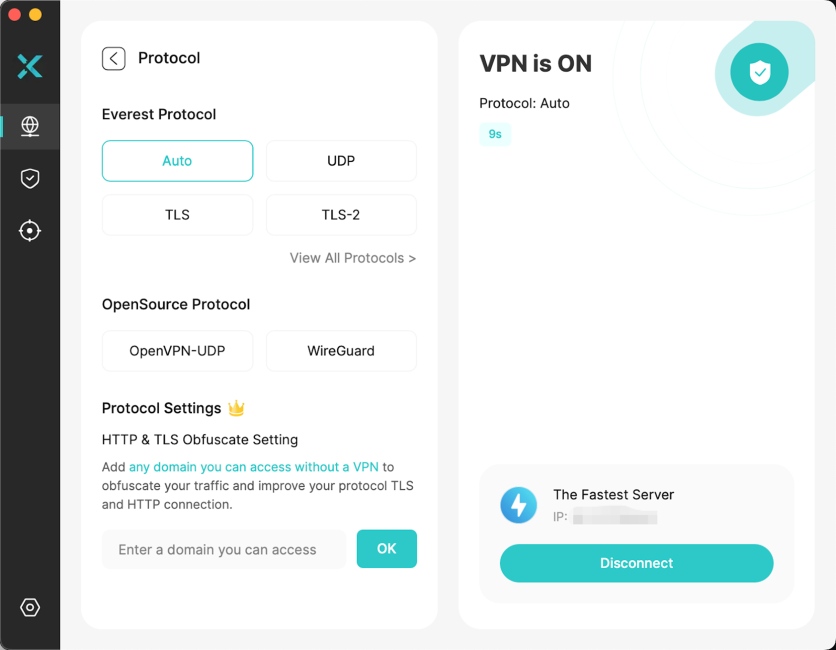
X-VPN offers both open-source and proprietary protocols, which initially raised questions. The service supports OpenVPN, WireGuard, and its own Everest protocol. I spent time testing all three to understand their practical differences.
OpenVPN delivered rock-solid reliability throughout my testing. Connections remained stable even when switching between WiFi and mobile data. Security felt airtight, although connection speeds lagged slightly behind those of WireGuard.
WireGuard impressed me most for everyday use. Page loads felt noticeably snappier, and video streaming started almost instantly. The speed difference wasn’t marginal. Pages that took 3–4 seconds to load with OpenVPN appeared in under 2 seconds with WireGuard. For anyone prioritizing speed without sacrificing security, WireGuard is the clear winner.
X-VPN
The Everest protocol initially concerned me. Proprietary protocols often signal a company hiding something. After researching X-VPN’s rationale and testing Everest’s performance, my perspective shifted. X-VPN built Everest specifically for bypassing censorship in restrictive regions. Unlike NordVPN’s proprietary protocol, which focuses on speed and remains open-source, Everest prioritizes unblocking capabilities. Keeping it closed-source prevents restrictive networks from analyzing and blocking it.
Here’s what won me over: X-VPN doesn’t force Everest on anyone. You can opt for OpenVPN or WireGuard exclusively if transparency is your top priority. I appreciate this approach. The company offers options and allows users to decide based on their priorities. Need to bypass aggressive censorship? Use Everest. Want guaranteed transparency? Stick with open-source protocols.
X-VPN’s No-Logs Policy: Comparing Industry Standards
I’ve reviewed enough VPNs to know privacy policies require scrutiny. Companies often claim “no-logs” while quietly collecting connection timestamps, bandwidth usage, or device information. X-VPN’s policy proved to be more straightforward than that of most competitors.
The company states it doesn’t track browsing history, connection logs, transferred content, or usage patterns. More importantly, X-VPN doesn’t collect IP addresses, location data, device information, or payment details that could identify users. When comparing X-VPN’s data collection practices to those of major competitors like NordVPN, ExpressVPN, and ProtonVPN, clear patterns emerge. All four services maintain strong positions on core privacy elements. No log browsing history, connection logs, IP addresses, or DNS queries.
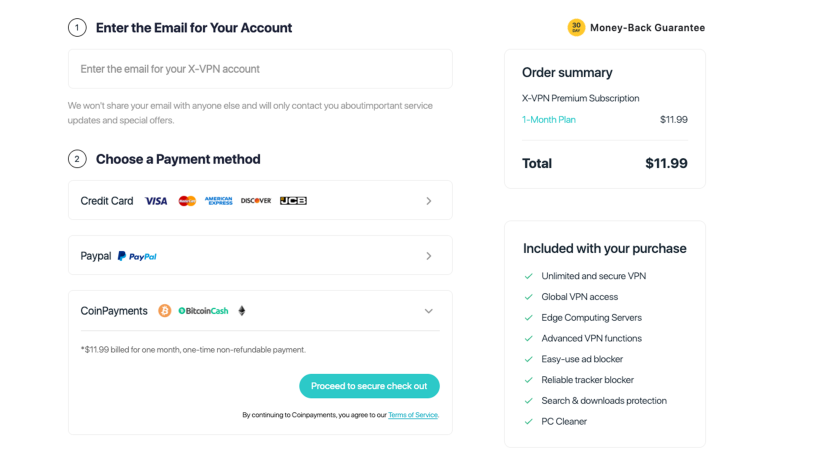
However, X-VPN distinguishes itself in two specific areas. While NordVPN, ExpressVPN, and ProtonVPN all require email addresses for account creation, X-VPN makes email registration completely optional. Additionally, X-VPN offers anonymous cryptocurrency payment options without storing any payment information, aligning with ProtonVPN’s approach, whereas NordVPN and ExpressVPN store payment details even when accepting cryptocurrency.
X-VPN
Technical implementation backs up these claims. X-VPN uses AES-GCM cipher suites with Elliptic-Curve Diffie-Hellman Ephemeral (ECDHE) key exchange. The company is transitioning to RAM-only servers, meaning your data will be deleted entirely when your session ends. Zero-retention packet handling ensures that data passes through without being stored anywhere in the system.
X-VPN publishes transparency reports detailing government data requests. According to CIO, their 2025 report shows zero data disclosures. An independent third-party audit is underway, which is expected to provide external verification of these practices.
The service accepts cryptocurrency payments, which I tested using Bitcoin. The process worked smoothly, allowing complete anonymity. This level of privacy commitment exceeds what you’d expect from a service offering a genuinely free tier.
Real-World Testing: Streaming and Content Access
One of the primary reasons people use VPNs is to access geo-restricted content, so I dedicated significant testing time to streaming platforms. I tested X-VPN’s ability to unblock content across multiple services, including Netflix, YouTube, and various regional streaming platforms.
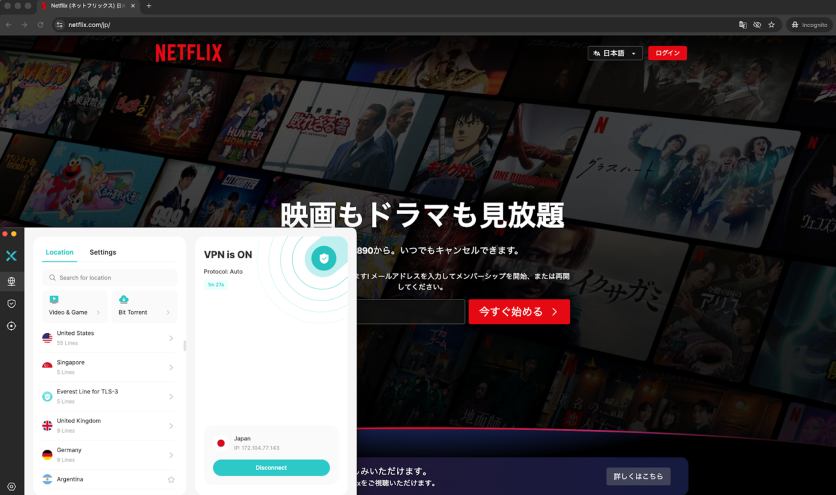
Netflix access worked consistently throughout my testing period. I connected to servers in the United States, the United Kingdom, and Japan on a MacBook to test different regional libraries. Each connection successfully bypassed geographic restrictions without triggering Netflix’s VPN detection. Streaming quality remained at 4K resolution with no buffering or quality drops during two-hour movie sessions.
X-VPN
YouTube performed exceptionally well across all server locations. The Ad Blocker feature eliminated pre-roll and mid-roll advertisements even on YouTube, which most ad blockers struggle with. This made watching longer content significantly more enjoyable without constant interruptions.

X-VPN
Regional sports streaming presented a more challenging test. I attempted to access content restricted to specific countries on another Windows PC and found X-VPN successfully unblocked these platforms when using nearby servers. Connection stability remained solid throughout live sporting events, with no sudden disconnections or quality degradation during crucial moments.

X-VPN
Gaming presented another critical use case. I tested X-VPN while playing competitive multiplayer games to assess the impact on latency. Ping times increased by an average of 15–20ms when connected through nearby servers, which proved imperceptible during actual gameplay. More distant servers showed higher latency increases of 40–50ms, which became noticeable in fast-paced competitive scenarios. For casual gaming or single-player experiences, even distant servers performed adequately.
The Everest protocol showed particular strength when accessing content from regions with stricter internet controls. Although I couldn’t personally test this in heavily restricted countries, the protocol’s design is specifically targeted at these scenarios. Users in such regions would likely find Everest more effective than the open-source alternatives.
Platform Support and Additional Features
I tested X-VPN across Windows, Android, macOS, and iOS devices to evaluate cross-platform performance. The service also supports Linux, Chromebook, Chrome Extension, routers, game consoles (PS4/PS5/Switch), Amazon Fire Stick, Apple TV, and Android TV. Installation took under five minutes on each platform I tested, with a consistent interface design making the transition seamless.
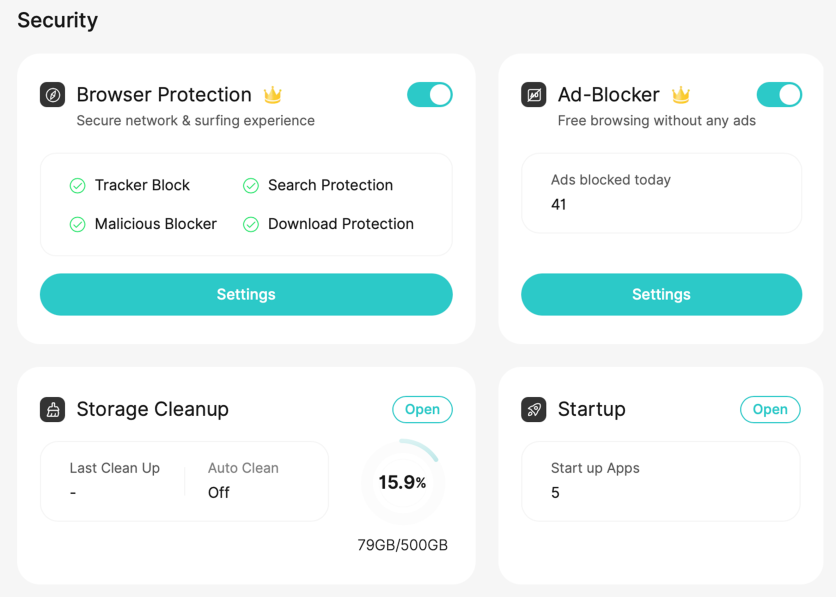
Premium subscriptions include five security tools at no extra cost. Browser Protection actively blocked malicious sites during my testing. I deliberately attempted to visit known phishing sites, and X-VPN intercepted them before loading. The tracker blocking made a noticeable difference. News sites loaded significantly faster without dozens of trackers firing in the background.
X-VPN
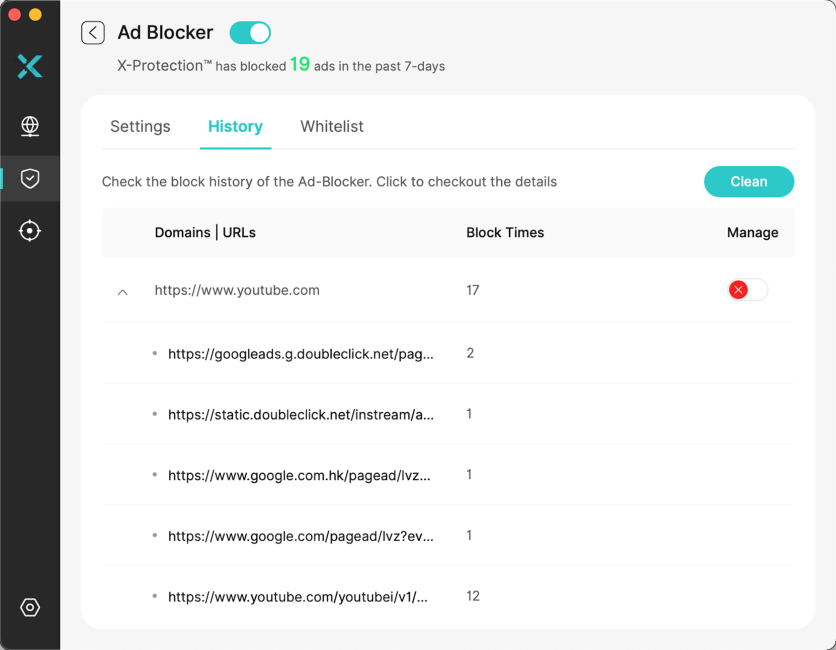
The Ad Blocker performed better than expected. Most ad blockers struggle with YouTube, but X-VPN’s implementation worked consistently. No pre-roll ads, no mid-roll interruptions. Banner ads disappeared from websites, making browsing cleaner and faster.
X-VPN
Dark Web Monitor scanned my email against breach databases instantly. Within seconds, it identified three breaches exposing my information. This feature alone justifies considering the premium tier, as it provides ongoing security monitoring beyond VPN functionality.
Mobile versions include Static IP options, Double VPN for layered encryption, and split tunneling. Split tunneling proved particularly valuable. I routed my banking app through the VPN for security while keeping my local streaming service on the regular connection. This avoided geographic restrictions without compromising protection for sensitive transactions.
Free vs Premium: What You Actually Get
The free version provides unlimited data across iOS, Android, Windows, macOS, Chromebook, and Chrome Extension. Free users manually select from 26 server locations covering 15 countries. One limitation frustrated me: manual selection currently works only on mobile devices. Desktop users get automatic server selection, which worked fine, but removed some control.
Free tier testing revealed banner ads in the mobile app. They’re unobtrusive, appearing at the bottom of the screen without blocking functionality. Desktop versions show no ads even on the free tier, which I appreciated during work sessions.
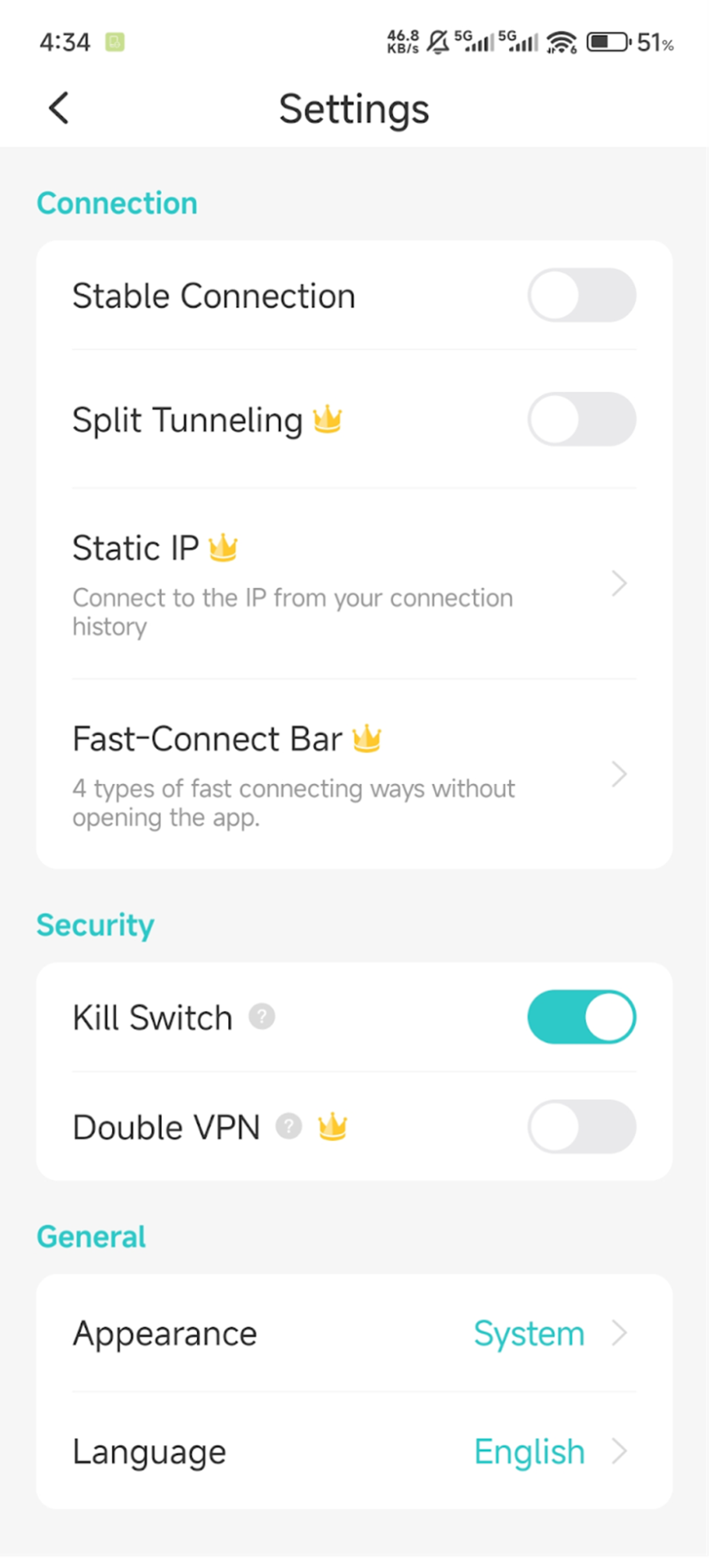
The free version utilizes the same AES-256 encryption as premium subscribers and includes kill switch protection. I tested the kill switch by deliberately disconnecting my VPN connection during a download. Internet access was immediately stopped, confirming that the kill switch works as advertised.
X-VPN
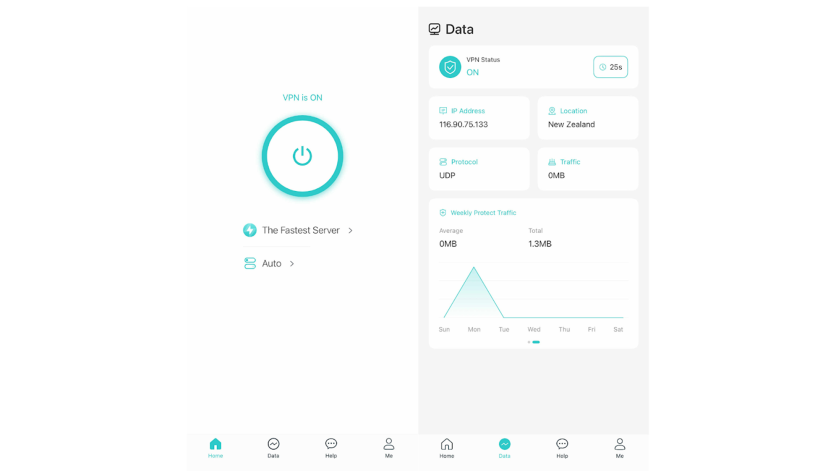
Premium subscriptions unlock the complete 10,000+ server network across 80+ countries, remove ads, add split tunneling, provide static IP options, enable double VPN, and include all five security tools. Premium users also get 24/7 live chat support. I tested customer support by asking technical questions about protocol selection and server recommendations. Response times averaged under two minutes, and representatives demonstrated genuine technical knowledge.
X-VPN
Testing X-VPN’s Performance and Speed
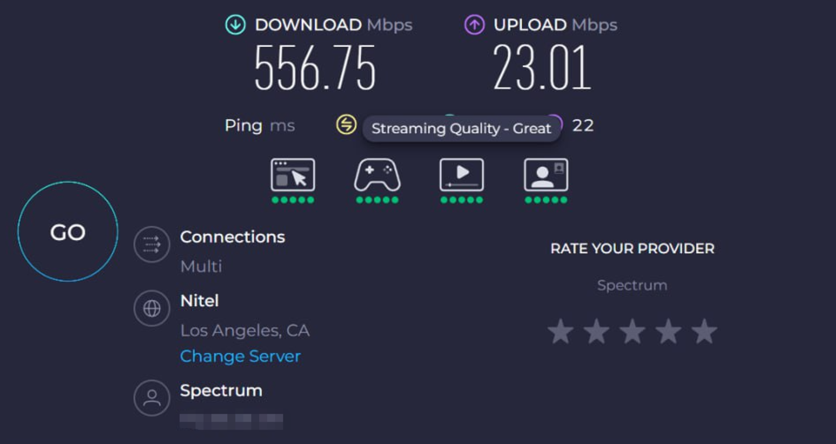
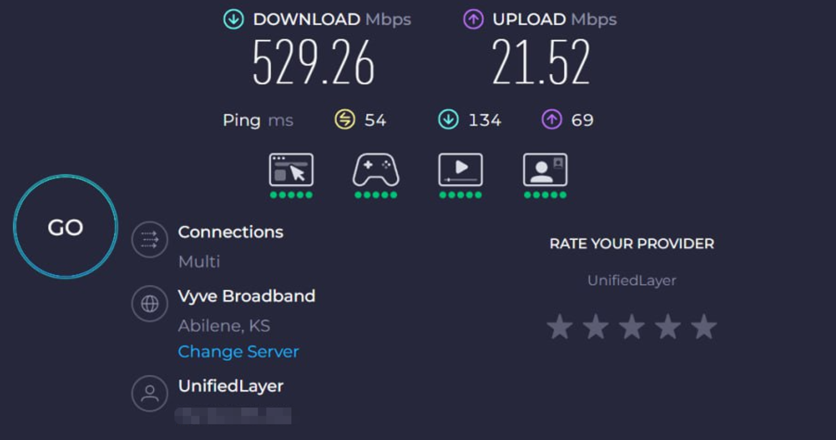
Speed testing revealed results that exceeded expectations. Without X-VPN, the baseline connection delivered 556.75 Mbps download and 23.01 Mbps upload speeds. After connecting to X-VPN’s fastest server using WireGuard protocol on Windows, speeds measured 529.26 Mbps download and 21.52 Mbps upload. That represents only a 5% speed loss, which is exceptional for any VPN service.
X-VPN
Real-world performance matched these numbers. Streaming 4K content on YouTube and Netflix played without buffering. Gaming sessions on competitive multiplayer titles showed minimal latency increases, with ping times rising only 15–20ms on average. This difference proved imperceptible during actual gameplay. Video conferencing worked smoothly throughout hour-long Zoom and Google Meet calls.
X-VPN actively improves infrastructure by upgrading servers from 10Gbps to 40Gbps capacity. According to Reuters, X-VPN balances privacy with performance improvements. This measured approach to feature rollouts suggests prioritization of reliability over rushing new capabilities to market.
Final Verdict
After two weeks of intensive testing, X-VPN delivers on its promises. The genuinely free tier with unlimited data works precisely as advertised. No hidden caps, no throttling, no mandatory registration. The privacy implementation impressed me throughout the testing process. Strong encryption, RAM-only servers, zero-retention packet handling, and cryptocurrency payment options demonstrate a serious commitment to user privacy.
Performance exceeded expectations, particularly with WireGuard protocol. Losing only 5% of connection speed while gaining comprehensive privacy protection is an excellent trade-off. The service handled streaming, gaming, and video conferencing without issues.
I recommend starting with the free version to evaluate performance without any commitment. Free users receive unlimited data and identical encryption as premium subscribers. If you need expanded server access or additional security tools, premium plans start at $2.99/month with the two-year option. The 7-day trial lets you test premium features risk-free, while website purchases include a 30-day money-back guarantee. Visit X-VPN’s pricing page to explore plan options and find what works for your needs.