Most companies today deal with the same frustrating situation. Their data lives in too many places. Customer information lives in Salesforce. Product data sits in MySQL. Analytics run in Snowflake. Marketing tracks campaigns in yet another system. Nobody agrees on basic metrics because everyone pulls from different sources.
ILUM takes a different route. This open-source data lakehouse pulls everything into one central system while letting you keep full control over both your data and your spending. Companies needing cloud flexibility alongside on-premise security find ILUM hits that sweet spot between the two extremes.
ILUM
- What Sets ILUM Apart in the Data Platform Space
- The Features That Actually Fix Common Problems
- Hybrid Setup That Works in Practice
- One System for Your Entire Data Stack
- Automatic Data Lineage Tracking
- AI Data Assistant That Boosts Team Output
- Structured Migration from Legacy Systems
- The Honest Drawbacks to Consider
- Why Smart Organizations Are Moving to ILUM Now
- Real Questions People Ask About ILUM
- Making Your Decision
What Sets ILUM Apart in the Data Platform Space
The folks at ILUM Labs started with a straightforward question: why should organizations have to pick between control and capability? Old-school data warehouses tie you down with expensive licensing that never stops. Pure cloud solutions mean giving up control of your data. Those legacy Hadoop or Cloudera setups drain budgets while barely keeping up with modern demands.
ILUM runs anywhere you actually need it. Your own servers, public cloud environments, or split between both. This matters tremendously for healthcare companies, financial institutions, and businesses operating across borders with complex regulatory requirements.
The platform replaces what used to need five or six different products. You get data ingestion, processing, analytics, notebooks, and AI tools all working together. Your teams stop burning time on connecting systems and start producing real results.
Here’s something most platforms treat as an add-on: data governance. ILUM tracks everything automatically. Where did this number come from? How did it change along the way? Who’s using it now? You can answer these questions instantly instead of spending weeks reconstructing the trail.
The Features That Actually Fix Common Problems
ILUM addresses specific pain points that data teams face every day. Each major capability solves a real headache that organizations deal with regularly.
ILUM
Hybrid Setup That Works in Practice
Plenty of vendors claim hybrid support but really favor one environment. ILUM was built from scratch to perform the same whether you’re on-premise or in the cloud. Keep your customer data locked down in your own data center where regulations require it. Run your heavy analytics workloads in AWS or Azure, where they scale easily. You own your sensitive information completely while still getting cloud benefits where they make sense.
One System for Your Entire Data Stack
Think about how much time goes into making different tools talk to each other. ILUM bundles the pieces you actually need:
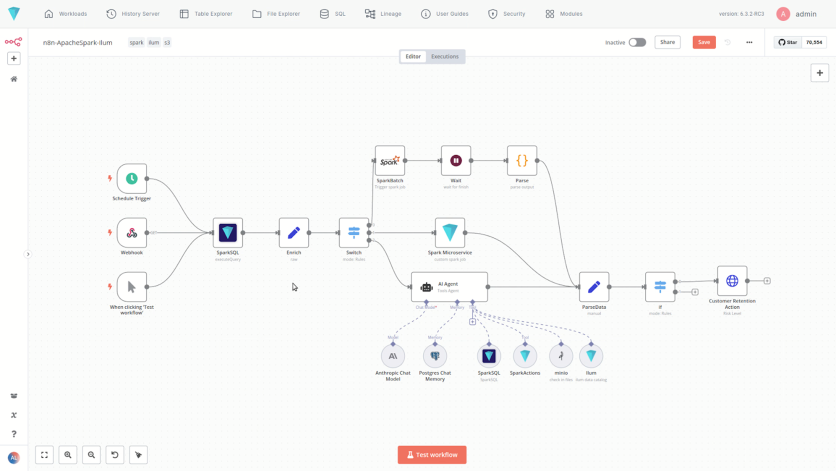
- Orchestration through Apache Airflow, MageAI, n8n, dbt, and Kestra
- Business intelligence via Apache Superset
- Machine learning tracking with MLflow
- Team collaboration through Jupyter notebooks
- Version control using Gitea
- Data movement with Apache NiFi
These components integrate naturally instead of requiring custom code to connect them. Your data engineers, business analysts, and regular users work from the same platform with consistent security policies.
Automatic Data Lineage Tracking
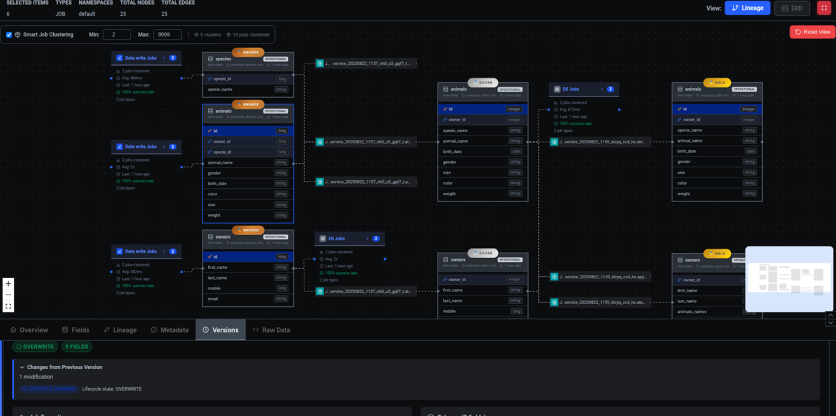
Regulations keep getting tougher. Executives want solid proof that their reports are accurate. Data scientists need to know exactly what information trained their models. ILUM’s automatic lineage tracking handles all of this without manual work.
The platform uses OpenLineage standards to build visual maps of your data flow. See which dashboards depend on which tables. Trace mistakes back to where they started. Show auditors your complete data chain without digging through documentation.
AI Data Assistant That Boosts Team Output
ILUM includes an AI assistant for routine data tasks. It writes SQL queries, fixes errors, creates charts and dashboards, and suggests complete architecture designs. This tool helps business users who don’t code while making experts more productive.
Someone from marketing can ask a question in normal language and get working SQL back. Data engineers save hours they’d spend on repetitive tasks. Everybody gets more done without hiring additional people.
Structured Migration from Legacy Systems
Lots of organizations run Hadoop or Cloudera installations that cost a fortune and barely keep up. ILUM offers a structured migration that avoids the “switch everything at once” disaster. Move your workloads over gradually. Keep using data models that work. Update on a schedule that fits your business reality.
The platform operates on Kubernetes, giving you container-based scaling and reliability. You gain modern features without tossing out years of accumulated knowledge or rewriting your entire stack.
The Honest Drawbacks to Consider
No platform fits perfectly everywhere. ILUM makes the most sense for organizations ready to treat it as core infrastructure rather than just another tool.
You need a bit of a mindset change. Teams used to separate tools will need time adjusting to integrated workflows. Getting full value means investing in proper change management and training people well.
Really small companies might find ILUM offers more than they need if basic reporting covers their requirements. The complete platform delivers the most value for businesses with complex data situations, multiple teams, and serious plans around analytics or AI.
Running a modern data infrastructure also needs IT involvement. Business users see simple interfaces, but someone manages servers, security, and daily operations. Organizations without technical capabilities should consider Ilum’s managed deployment option, which handles infrastructure for them.
ILUM handles these challenges in practical ways. Leaders get reference architectures and setup guides that position the platform as a long-term investment. You can start small with one valuable use case before rolling out everywhere.
The Community Edition costs nothing and lets teams test everything without spending a dollar. Managed SaaS options cut operational work for organizations wanting the benefits without running infrastructure themselves.
ILUM
Why Smart Organizations Are Moving to ILUM Now
Timing counts with data platforms. Many businesses accumulated technical debt over years of buying disconnected tools and letting data spread everywhere. AI projects fail when models train on questionable information. Compliance costs climb as auditors can’t figure out where the data came from.
ILUM creates a clear way forward. Build a governed data foundation before your AI projects get big. This prevents expensive do-overs and technical debt down the road.
The hybrid design means updating once to a platform that’ll last instead of switching tools every few years. Everyone gets one place to work with data they can trust, using powerful features in a single system.
Companies acting now pull ahead of competitors still wrestling with outdated infrastructure. They build analytics and AI on firm ground instead of sand.
Real Questions People Ask About ILUM
Who should actually use ILUM?
Organizations viewing data as a strategic business asset. Companies needing one reliable platform handling reporting, analytics, and AI across both cloud and on-premise locations. Businesses with compliance requirements or multiple teams needing coordinated data access.
How does this help with our AI plans?
You can’t build sustainable AI without solid data underneath. ILUM organizes, governs, and opens up your data so models and analytics rest on reliable, understood information instead of random spreadsheets and one-off exports.
We’re running Hadoop or Cloudera now. How hard is switching?
ILUM provides a structured migration, avoiding a disruptive all-at-once cutover. Shift workloads in phases that don’t interrupt operations. Keep data models that work. Modernize on schedules matching business realities instead of vendor timelines.
Can ILUM meet strict data rules?
Yes. Run the platform completely inside your own datacenter when regulations require it. Sensitive data stays in your environment while cloud resources handle other work where appropriate.
Do we dump all our current tools?
Not necessarily. Many customers first use ILUM to unify and govern critical data while keeping existing reporting tools running. Consolidation happens gradually where it makes business and cost sense. For the most part, you’ll be able to integrate your existing tools with Ilum and test various solutions at once.
How do we test ILUM without a big risk?
The Community Edition is completely free. Test the platform without any limits before committing to larger deployments. This lets you validate fit with actual business problems.
ILUM
Making Your Decision
ILUM represents a significant choice for organizations ready to treat data as strategic infrastructure. The platform delivers genuine benefits but needs commitment to reach full value.
Success comes from getting stakeholders aligned around a clear plan, starting with focused problems, and expanding steadily as results prove out. Organizations investing in training, documentation, and managing change see the strongest outcomes.
The free Community Edition provides a no-risk way to check if ILUM fits your situation. Testing with real business problems tells you more than reading ever could. Learn more about the platform at ILUM, explore their medallion architecture guide, review the complete documentation, or read about getting started with Apache Spark on Kubernetes. You can request access here.
For companies serious about AI and analytics, ILUM offers a path from scattered chaos to unified capability. The real question is whether your organization is ready to take that step.